
JoJo Golden Spirit Combat and Rush
Lineups, ultimate timing, six styles, and the three-style Rush window.
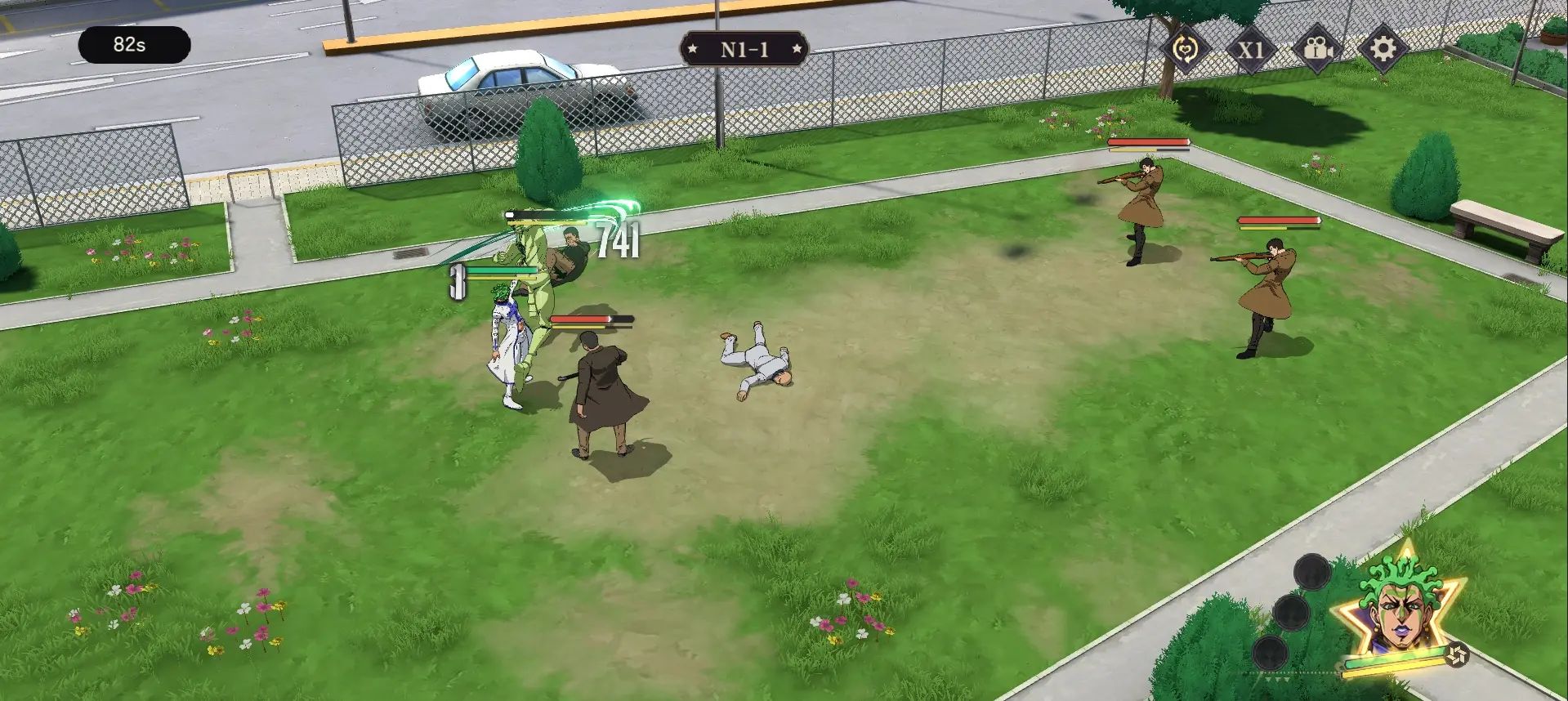
JoJo’s Bizarre Adventure: Golden Spirit is an auto-battler. You do not steer every punch. You set a lineup, you read the path preview, and you choose when the bottom-right ultimate icons fire. That is the whole player input. If a fight feels like it is playing itself badly, the problem is almost always AUTO spending ultimates too early, a melee unit walking the wrong red arrow, or a team with three copies of the same fighting style that can never Rush. This page is the combat manual. For first-hour account setup, use Getting Started. For the rest of the tree, use the Guides Hub.
Turn AUTO off if you want Rush. AUTO fires ultimates the instant they fill. Rush needs ultimates from three characters with different fighting styles. When that happens, the team enters Rush for about ten seconds, gains 25% Final DMG, and restores a small amount of energy. If AUTO dumps the first two ultimates the moment they are ready, the third style never lines up and you skip the only team-wide damage window the kit is built around. Manual timing is not extra flair. It is how Rush exists.
Paths, stars, and the damage panel
Before Battle Start, red arrows show melee paths and dotted lines show ranged paths. A button above Battle Start reveals your own paths as well as the enemy’s. Use it. A Defense unit on a dotted line is wasting the first five seconds of damage reduction. A Ranged unit on a red arrow is walking into melee and throwing away the plus 5% damage per tile of distance. Place melee on red, ranged on dotted, and keep Support off the first collision unless the stage forces a protect objective.
Stages also have star-rating extra objectives. Typical extras are time remaining and allies not defeated. Those stars fill chapter chests and Hard unlocks, so a sloppy AUTO clear that wins with two deaths can still fail the grade you need. If a thumbs-up recommended icon appears on a character, the stage wants that kit for the extra stars, not only for a raw win. Recommended icons are per fight, not a substitute for the PVE tier list.
A damage stats panel exists during fights. Open it when a boss feels unkillable. You will often see Giorno low on the DPS meter and high on heals. That is correct. Giorno is a support and heal lynchpin, not your top DPS. Feed him because allies stay standing, then let Assault and Ranged units carry the meter. The SSR roster and fighting styles pages list who belongs in which lane.
Six fighting styles
Every character has one of six fighting styles. Style passives are not flavor text. They decide who you put on the first collision, who you save for Rush, and which weather you can ignore. Full kit writeups live on fighting styles. The combat numbers you need in a fight are:
- Defense: 30% DMG reduction for the first 5 seconds.
- Assault: when HP is below 40%, a basic attack heals 150% of Attack, once per 10 seconds.
- Agility: targets the counterpart at the start; plus 5% crit if untargeted; below 60% HP, 3 seconds of stealth after being hit, 10 second cooldown.
- Ranged: plus 5% damage per 1 tile of distance.
- Special: a basic attack restores 20% max energy, once per 10 seconds.
- Support: when any ally HP is below 30%, heal 10% max HP, once per 10 seconds.
Rush still requires three different styles. Three Defense tanks look safe and will never trigger the 25% Final DMG window. A Defense opener, an Assault or Ranged carry, and a Support or Special battery is the shape most story teams want. Special’s energy restore is how you get the third ultimate in time. Support’s emergency heal is how you keep the star that says allies not defeated.
Wit, Combat combos, and character quirks
Wit is matchup knowledge. The clean example is Ripple extra damage versus zombies and vampires. If a stage is full of undead or vampire kits, a Ripple user is not a sidegrade. It is a typed advantage. You do not need a hidden stat table. You need to read the enemy list and bring the counter instead of your default DPS.
Combat is the combo half of the same idea. Pair kits that multiply each other. Cioccolata’s mold plus Secco’s mud is the official example: mold spreads on controlled enemies, mud turns the ground into area control, and together they hold a pack that neither kit locks down as well alone. Build around a combo when you have both pieces. Do not force a combo you do not own.
Character quirks are real and they are not bugs. Mista’s accuracy drops on the fourth attack, so a plan that needs four clean shots from him will fail on the fourth. Diavolo can conceal at battle start, which means the first red arrow you stared at may not be the body you hit. Plan a first target that still works if he is hidden. These quirks matter more than a tiny stat chip.
Weather changes the same board. Strong wind shoves movement and punishes long-range setups. Blowing sand and Heavy fog cut ranged reach; Narancia can ignore those range cuts. Rainfall gives Squalo extra skill and basic-attack range. Heavy snow and blizzard slow attack speed and damage movers while suppressing Prosciutto’s aging. Extreme heat makes that aging perform better. Breeze is the baseline. The weather guide is the full named list. If a Rush team suddenly cannot connect, check weather before you rebuild the whole box.
Hall of Trials uses the same combat rules under extra constraints. Entrance Exam forbids buffing or debuffing Giorno and punishes a dead flame with Shadow Sabbath. Extreme Trial is a wave race for Dramatic Scenes. Bloody Battle adds roguelike boons and can attach weather such as snowstorm Chill. Read Hall of Trials when the desk unlocks at Quest Level 3, and read progression when essence stops applying because Quest Level capped the unit. Combat skill does not bypass a level cap.
Practice one story fight with AUTO off, three different styles, and the path button tapped before Battle Start. If Rush appears and the damage panel jumps, you have the combat loop. If it does not, you still have an AUTO or style-diversity problem, not a missing SSR.
Frequently Asked Questions
Quick answers for codes, Rush, and Stand lineups.
What do I actually control in a fight?
The lineup and when ultimates fire from the bottom-right icons. Everything else auto-attacks. Path preview and AUTO are the two settings that decide whether Rush happens.
Why does Rush never trigger on AUTO?
AUTO fires ultimates immediately. Rush needs three characters with different styles to ultimate together. Turn AUTO off, then fire the three icons as a set.
What do the red arrows and dotted lines mean?
Red arrows are melee paths. Dotted lines are ranged paths. A button above Battle Start shows your paths too. Put melee on red and ranged on dotted.
Is Giorno supposed to top the damage panel?
No. Giorno is a support and heal lynchpin. Read heals and deaths on the panel, then check the SSR roster for actual carries.
How do Wit and Combat differ?
Wit is matchup knowledge, such as Ripple versus zombies and vampires. Combat is kit combos, such as Cioccolata mold plus Secco mud. Both beat raw stats on the right stage.
Where should I go after I can trigger Rush on purpose?
Read weather for environment swaps, Hall of Trials for mode rules, and progression for the Quest Level cap.